THE STORY
Contents
- Silfra, Iceland: When 100-Meter Clear Water Lies to Your Brain, the Blind Ice-Age Ghost, and the 2°C Price
- Why Distances Are Lies: 50 Kilometers of Basalt Filter and Water from the Cold War
- The Blind Ice-Age Ghost in the Lava Pores
- From 1966 Wetsuits to the 2017 Reckoning, and the Darker Sibling in the Lake
- Quick Facts: Silfra Fissure & Subterranean Hydrology
- Frequently Asked Questions (FAQ)
- Related Iceland Explained Episodes
Silfra, Iceland: When 100-Meter Clear Water Lies to Your Brain, the Blind Ice-Age Ghost, and the 2°C Price
Lean forward off the bottom step of the steel ladder at Silfra, six hundred meters southeast of the Law Rock in Þingvellir National Park, and the first thing that happens has nothing to do with sightseeing. Your torso is sealed inside a heavy neoprene or trilaminate dry suit over a thick fleece jumpsuit that dive guides affectionately call the "Teddy Bear," and your hands and skull are wrapped in seven-millimeter neoprene. Only the small triangle of skin around your mask and lips is bare. When that skin touches the two-degree-Celsius water, it does not feel wet; it feels as though someone has pressed a solid slab of frozen iron against your cheekbones.
Before your conscious mind can cast a vote, a primitive autonomic switch flips inside your brainstem. Cold on exposed skin can provoke an involuntary gasp and a surge of alarm, while facial cooling can also trigger the heart-slowing dive reflex. As your lips grow numb and settle into a dull, rubbery truce, the howling wind of the Þingvellir rift valley disappears above your hood, and you open your eyes inside an optical glitch.
Why Distances Are Lies: 50 Kilometers of Basalt Filter and Water from the Cold War
Most travel brochures call floating down Silfra "snorkeling between the continents," as if the main attraction were stretching out your arms in The Big Crack to touch a symbolic wall of North America with one glove and Eurasia with the other. In reality, you are floating inside one of dozens of tension fractures (gjár) tearing across the seven-kilometer-wide Þingvellir subsidence graben, which drops and widens by roughly two centimeters a year as the plates pull apart.
While the underlying Þingvallahraun lava flowed from craters south of Hrafnabjörg roughly nine to ten thousand years ago, the water-filled chasm you float through today was already there before the ten days of violent earthquakes in June 1789. As the valley floor dropped by up to two and a half meters, rising water levels covered its powerful spring, changing the appearance of a fissure where people had previously caught fish.
That water is the reason your depth perception breaks the instant you look down. Fifty kilometers north-northeast of Þingvellir sits Langjökull: the Long Glacier. Usually, when an Icelandic glacier melts in summer, its surface rivers run thick and opaque with pulverized grey rock flour (jökulmjöl), like the Hvítá at Gullfoss. Along the southern edge of Langjökull, however, the porous post-glacial lava fields of Skjaldbreiður swallow the meltwater whole before a surface river can form.
For the next thirty to one hundred years, that water creeps southward in absolute darkness through a deep subterranean aquifer of vesicular tholeiitic basalt. Pressed through fifty kilometers of microscopic volcanic pores, the water is filtered free of much of the suspended glacial silt that clouds surface rivers. Some of the water sliding past your mask may have entered the rock while the Cold War was still on, and it is emerging into the daylight for twenty minutes on its way into Lake Þingvallavatn.
Because there is virtually zero suspended particulate matter to cause optical backscatter, underwater visibility inside Silfra exceeds one hundred meters, approaching the theoretical transparency limit of pure distilled water. The human visual cortex relies on atmospheric haze or water murk to judge how far away an object sits. Strip that haze away, and distances become lies. Look down through Silfra Hall and into the hundred-meter-long nave of Silfra Cathedral, where vertical columns of black basalt drop twenty to twenty-three meters to the boulder floor, and the bottom looks close enough to scrape your knees. Look at your own thick five-fingered neoprene gloves extended in front of your mask, and refractive magnification makes them look like detached, low-poly video-game assets floating in empty space.
Meanwhile, the water column acts as a ruthless color filter. Pure water absorbs longer red, orange, and yellow wavelengths within the first few meters while scattering short blue wavelengths via Rayleigh scattering. Everything down here is reduced to three colors: matte charcoal basalt, electric sapphire water, and waving, radioactive-looking neon-green carpets of filamentous Cladophora algae that locals call "Troll Hair" (tröllahár). The visual geometry looks so much like a digital render that in 2013, when Norwegian director Erik Skjoldbjærg needed to film deep-sea saturation diving on the floor of the North Sea for the oil-boom thriller Pioneer (Pionér), he brought his cameras into Silfra, using a two-degree freshwater crack in an Icelandic meadow to stand in for the bottom of the ocean because reality rendered cleaner than visual effects.
The Blind Ice-Age Ghost in the Lava Pores
At first glance, drifting through Silfra feels like floating through a sterile mineral museum, accompanied only by the raspy hiss of your own breath in the snorkel tube and the faint rubbery squeak of your dry suit shifting at the shoulders. The two-to-four-degree water is too cold and too nutrient-poor (oligotrophic) for permanent schools of large fish, though in late August and September large lake-dwelling Arctic char and brown trout occasionally swim up from Lake Þingvallavatn into the shallow turquoise exit basin of Silfra Lagoon, and tiny eight-centimeter dwarf benthic char (dvergbleikja) hide year-round inside the dark basalt boulder caves at the bottom of the trench.
Yet the most remarkable creature in the wider Þingvallavatn groundwater story is one almost no diver ever spots. Collected from groundwater inflows at Vatnsvík in the lake, Crymostygius thingvallensis is a tiny, ghostly amphipod crustacean that belongs to its own distinct biological family (Crymostygidae) and has been found nowhere else on the planet.
With vestigial eyes, a translucent body, and little pigment, Crymostygius thingvallensis is a living relic of the Pleistocene glaciations. Biologists concluded that when a kilometer-thick ice sheet covered Iceland during the Last Glacial Maximum, wiping out surface freshwater life across the island, this subterranean crustacean survived for tens of thousands of years inside liquid groundwater refugia trapped beneath the glacier in the volcanic rock pores. Every time you pull your snorkel from your mouth to take a sip of Silfra's sweet, century-filtered water, you are drinking from an underground river that has been sheltering a blind Ice-Age survivor since before the first human set foot in Northern Europe.
From 1966 Wetsuits to the 2017 Reckoning: and the Darker Sibling in the Lake
For nearly two centuries after the 1789 earthquakes changed the valley, nobody dreamed of getting into Silfra on purpose. To rural Icelanders, the bottomless blue cracks of the Þingvallahraun lava field were places to keep sheep and children away from; one hundred and fifty meters west at Nikulásargjá, after King Frederik VIII of Denmark visited in 1907, travelers preferred to stand safely on the bridge and toss coins into the water, turning that neighboring rift into Peningagjá ("Money Chasm") until park authorities banned coin-throwing to stop copper and nickel corrosion from poisoning the moss.
Human immersion in Silfra began in 1966 as an exercise in pure physical stubbornness, when pioneer diver Þröstur Sigtryggsson and a small group of students from the Reykjavík Seafaring School (Stýrimannaskólinn) slipped into the two-degree chasm wearing primitive, thin neoprene wetsuits that let the freezing glacial water flush straight against their ribs. A decade later, in 1976, diver Tómas Knútsson (who later founded DIVE.IS) began exploring and mapping the fissure's caverns. In 1989, Knútsson switched to the equipment that changed his diving year: a sealed dry suit paired with insulating layers.
By trapping a layer of dry, body-warmed air around the diver's core, the dry suit turned Silfra from a masochistic endurance test for Icelandic seamen into a global bucket-list phenomenon. Because the constant groundwater current flowing toward Lake Þingvallavatn prevents Silfra from freezing over even when January air temperatures drop to minus twenty degrees Celsius, tens of thousands of visitors were soon lining up at the steel entry stairs every year.
Then the cold collected its debt. Between 2010 and early 2017, as annual visitor numbers soared, a series of fatal medical emergencies struck the fissure: bringing renewed attention to the physiological demands of two-degree water, constricting suits, and the physical exertion of moving in bulky equipment. When the brain panics inside a tight suit in freezing water, the margin for error is zero.
In 2017, Þingvellir National Park and the Icelandic Transport Authority (Samgöngustofa) stepped in and rewrote the rules of the fissure. Scuba divers now have to document dry-suit competence through certification or ten logged dry-suit dives in the preceding two years, confirmed by a recognized instructor; overhead cave penetration inside the unstable, earthquake-wedged boulder piles is prohibited, and scuba depth is limited to eighteen meters; guided tours use small groups, typically six snorkelers or three divers per guide, and medical screening, with DIVE.IS requiring a doctor's approval from age sixty. Meanwhile, experienced technical divers looking for the wild, uncrowded silence Silfra had in the 1980s began slipping seven hundred meters east along the lakeshore to Davíðsgjá ("David's Fissure"): Silfra's darker, deeper sister crack submerged inside Lake Þingvallavatn, where there are no steel staircases, the basalt walls plunge past twenty-one meters into black shadow, and giant lake trout patrol the gloom.
Climb the steel exit stairs out of Silfra Lagoon at the end of your forty-minute drift, peel off the neoprene hood, and let the wind of the Þingvellir plain hit your numb cheeks. After half an hour suspended in water that spent fifty years in the dark under Skjaldbreiður so every pebble twenty meters down looked sharpened with a razor, ordinary daylight air feels strangely dusty and opaque. Behind you, the two-degree current keeps sliding silently out of the ancient fracture toward the lake, flushing away every trace that you were ever in the wound.
A STORY. NOT A GUIDE.
ICELAND. TOLD.
Quick Facts: Silfra Fissure & Subterranean Hydrology
| Feature / Attribute | Verified Field Detail |
|---|---|
| Location & Coordinates | Þingvellir National Park (Parking P5, 600 m SE of Lögberg), South Iceland (64.2558, -21.1158); ~50 km NE of Reykjavík on the Golden Circle. |
| Water Source & Filtration | Meltwater from Langjökull glacier (50 km NNE), filtered underground through the porous Skjaldbreiður / Þingvallahraun basalt lava aquifer for 30 to 100 years before emerging in the ancient fissure. |
| Visibility & Temperature | Over 100 meters (330+ ft) underwater visibility; constant 2°C to 4°C (35–39°F) year-round; continuous gentle current prevents winter freezing and flushes sediment in minutes. |
| The Four Dive / Snorkel Zones | 1. The Big Crack (narrowest continental fault corridor); 2. Silfra Hall (widened boulder chamber with green Cladophora "Troll Hair" algae); 3. Silfra Cathedral (100 m long, 20–23 m deep basalt nave); 4. Silfra Lagoon (shallow turquoise outflow basin). |
| Unique Biology & History | Part of the wider Þingvallavatn groundwater landscape, where the endemic amphipod Crymostygius thingvallensis was documented at Vatnsvík; dwarf Arctic char (dvergbleikja) shelter in lava crevices. First dived in 1966 by Þröstur Sigtryggsson; Tómas Knútsson switched to a dry suit in 1989; filmed for the 2013 deep-sea thriller Pioneer. |
| 2017 Safety & Gear Rules | Dry suits mandatory for scuba; suitable thick wetsuits also permitted for snorkeling. Scuba requires a diving qualification plus dry-suit certification or instructor-confirmed proof of 10 dry-suit dives in the previous 2 years; maximum dive depth 18 m. Guided-tour ratios and medical screening follow the applicable operator requirements. |
Frequently Asked Questions (FAQ)
Why is the water in Silfra so clear compared to other glacial rivers in Iceland?
Most glacial rivers flow over the surface and carry suspended rock flour (jökulmjöl) that turns them milky grey or brown. The meltwater feeding Silfra comes from Langjökull glacier 50 kilometers away, sinks immediately into the porous Skjaldbreiður lava fields, and filters underground through microscopic basalt pores for 30 to 100 years, removing suspended sediment to produce over 100 meters of visibility.
Do you really touch the North American and Eurasian tectonic plates in Silfra?
Silfra is one of many parallel tension fissures (gjár) inside the 7-kilometer-wide Þingvellir rift valley (graben) where the North American and Eurasian plates pull apart at roughly 2 centimeters per year. In the narrowest section (The Big Crack), the vertical basalt walls of the fault fracture are close enough for a swimmer to touch both sides of the chasm at once.
How cold is Silfra, and does it freeze in winter?
The water in Silfra stays at a constant 2°C to 4°C (35–39°F) summer and winter because it wells up directly from deep underground springs. Because those springs generate a continuous gentle current flowing into Lake Þingvallavatn, Silfra never freezes over, even in midwinter when the air temperature drops far below zero and the adjacent lake is covered in ice.
What are the safety requirements for snorkeling or diving in Silfra?
Park rules require cold-water equipment, a buddy, no entry into overhead environments, and a maximum scuba depth of 18 meters. Scuba divers need a diving qualification and either dry-suit certification or instructor-confirmed proof of ten dry-suit dives in the previous two years. Snorkelers may also use a suitable thick wetsuit. Guided operators set medical screening and group requirements; DIVE.IS requires a physician's sign-off for participants aged 60+.
Related Iceland Explained Episodes
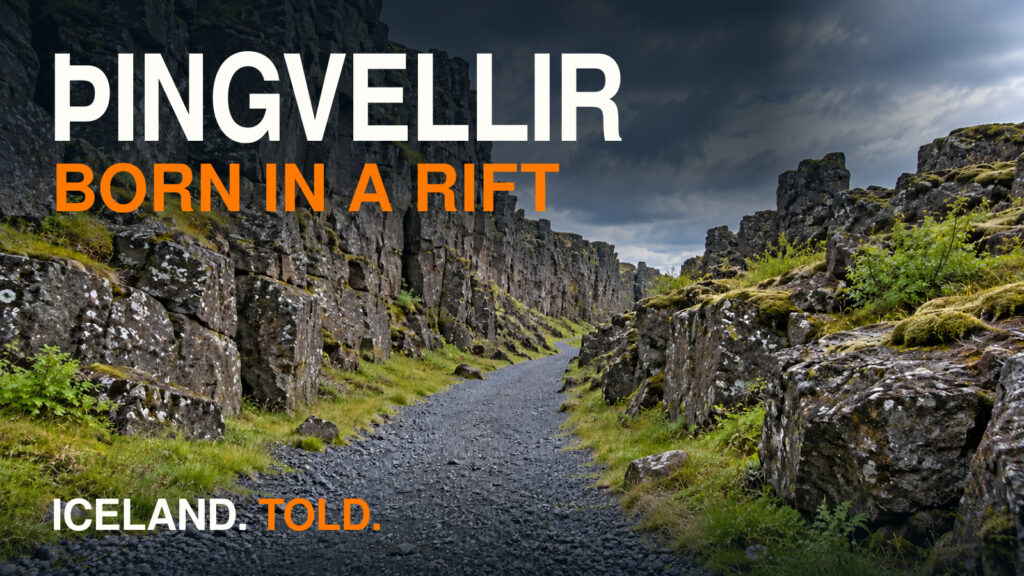
- Þingvellir: The Rift Where Iceland Was Born: Step out of Silfra onto the dry fault floor of Almannagjá and Lögberg to see how the 930 AD parliament used the same tectonic rift as an acoustic megaphone.
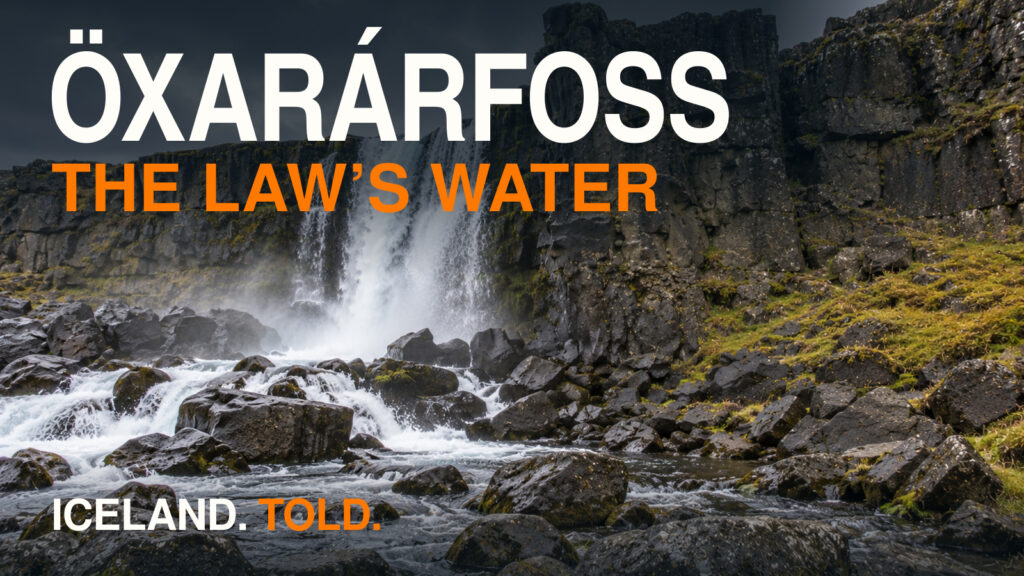
- Öxarárfoss & Drekkingarhylur | Dark History in Þingvellir: Walk one kilometer northwest from Silfra to see the other mood of Þingvellir's water: the artificial waterfall diverted in 930 AD and the seventeenth-century Drowning Pool.
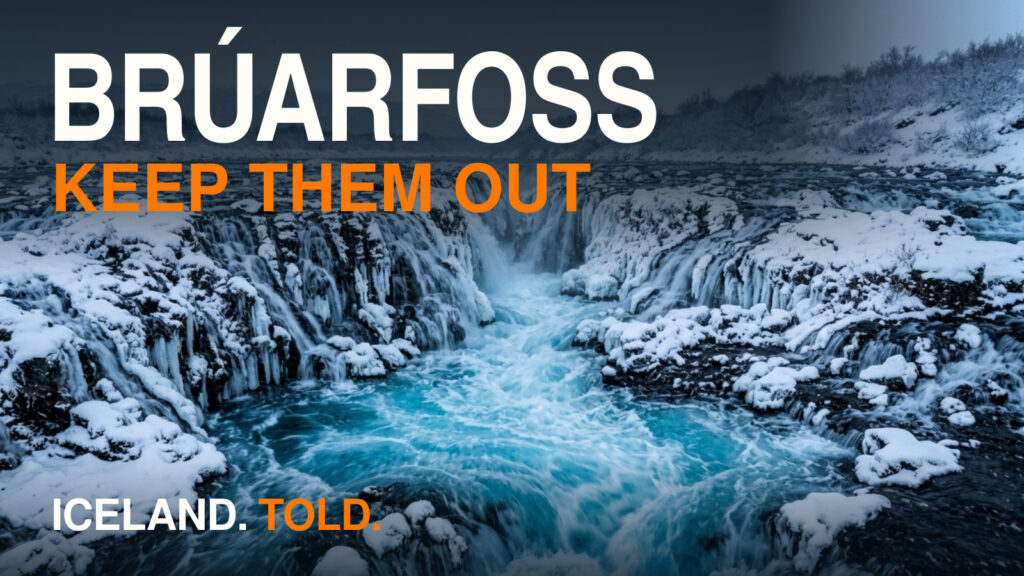
- Brúarfoss, Iceland | The Blue Fissure Waterfall: Follow Langjökull's underground lava-filtration plumbing east across the Golden Circle to the electric-blue slot of the river Brúará.